
Case study:
Sizing UX projects is HARD! There are so many different variables involved. Is there a problem statement? Is the problem statement clear? Is research needed and if so, how much research is required? Is this a new feature or an enhancement? What's the scope? And the list goes on.
The goal of this study was to:
1. Determine what factors contribute to prolonging a project
2. Solution processes that will make sizing UX projects easier and accurate
Step 1: Discovery
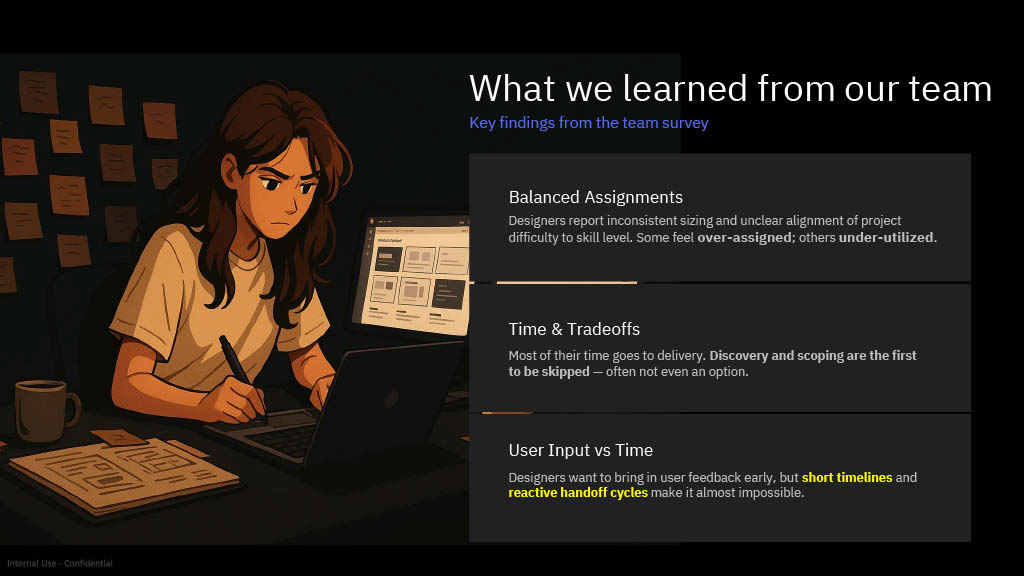
We needed to hear from designers. What happened when a project that was originally sized at 2 weeks turns into 2 months? What are the factors that contribute to a delivery delay? What could be done from an organizational standpoint to make the sizing process easier? To answer these questions we decided to conduct a survey for designers and facilitate a design workshop.
Survey
Our survey had 18 respondents: 5 design leads, 5 senior designers, 5 mid-level designers, and 3 junior designers
Some of the questions asked were: What designs steps do you skip when you have a short deadline? What factors contribute to a prolonged timeline?
Workshop
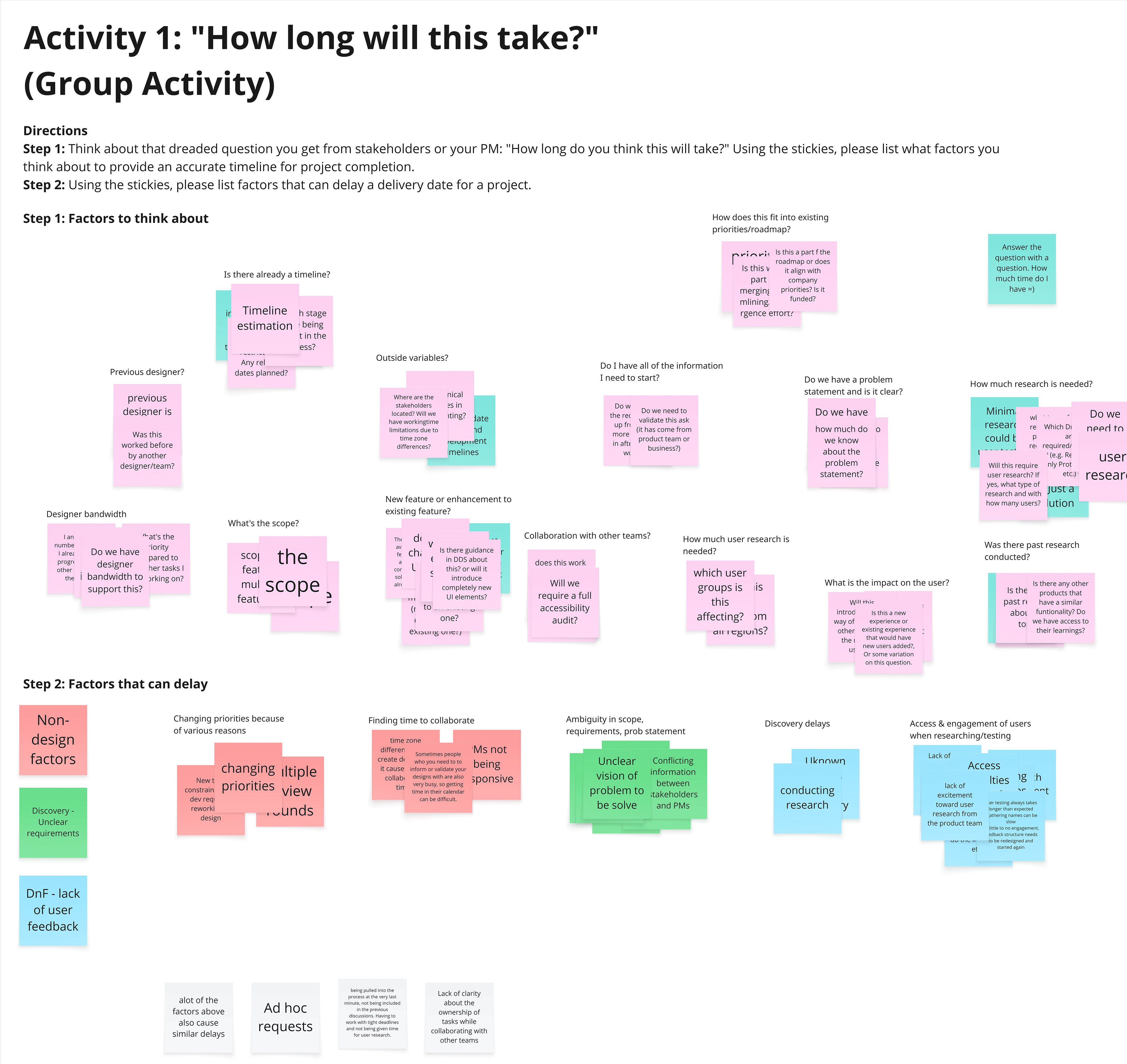
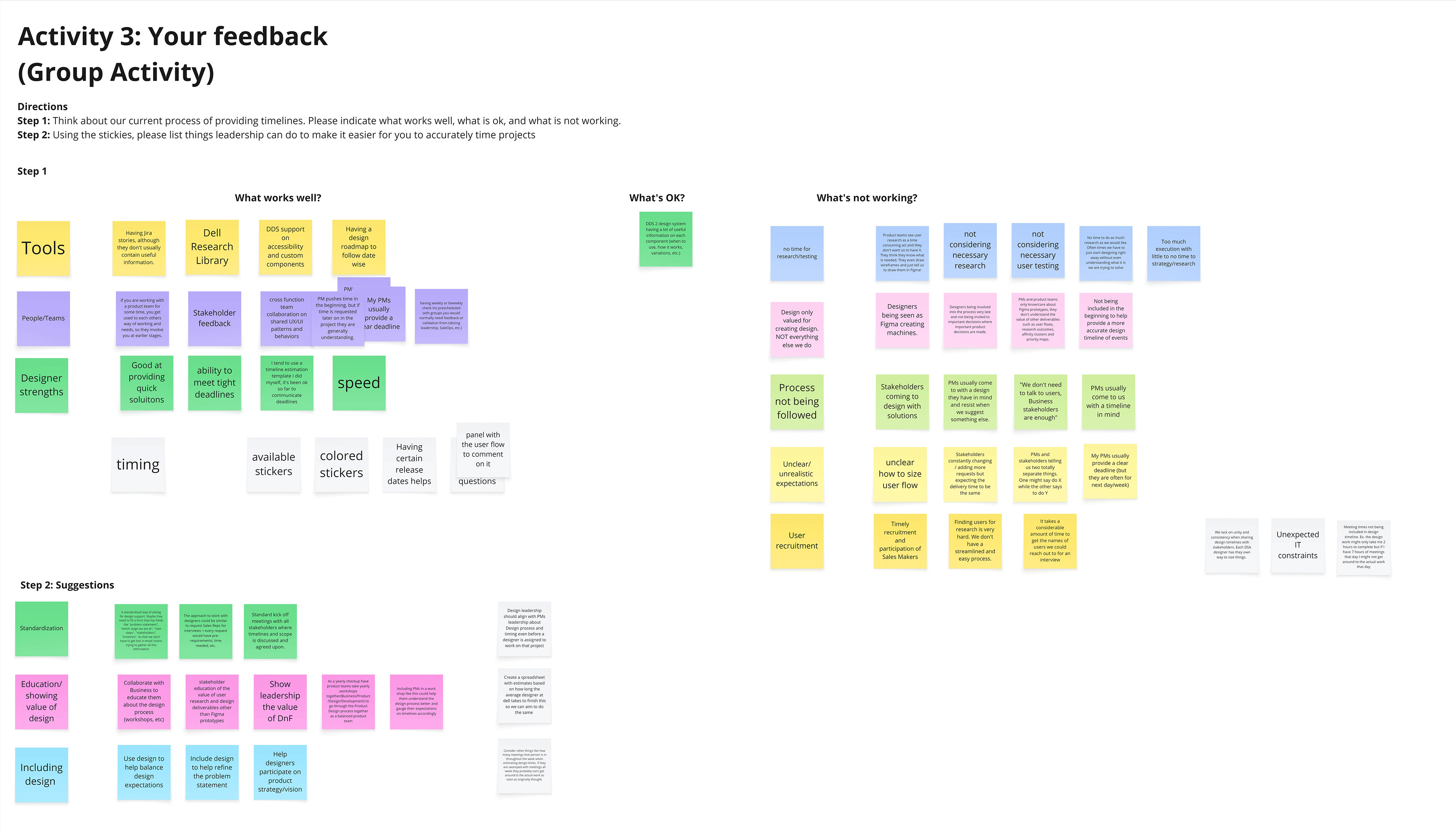
Our workshop consisted of 16 participants across 2 one hour sessions. We structured the workshop into different activities, trying to identify: what factors designers think about when sizing a project, what factors can cause a delay in delivery, what works well and what can leadership do to make it easier to size projects.
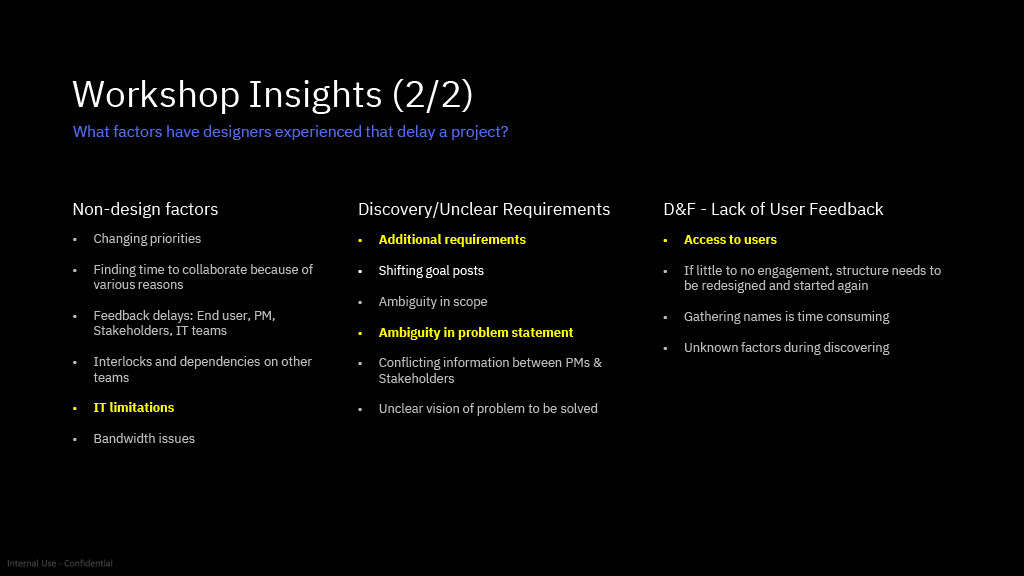
What did we learn from the workshops?
Step 2: Framing
After hearing from designers, we had enough information to begin framing. We came up with different solutions to various problems the designers encountered. These solutions had various levels of implementation complexity.
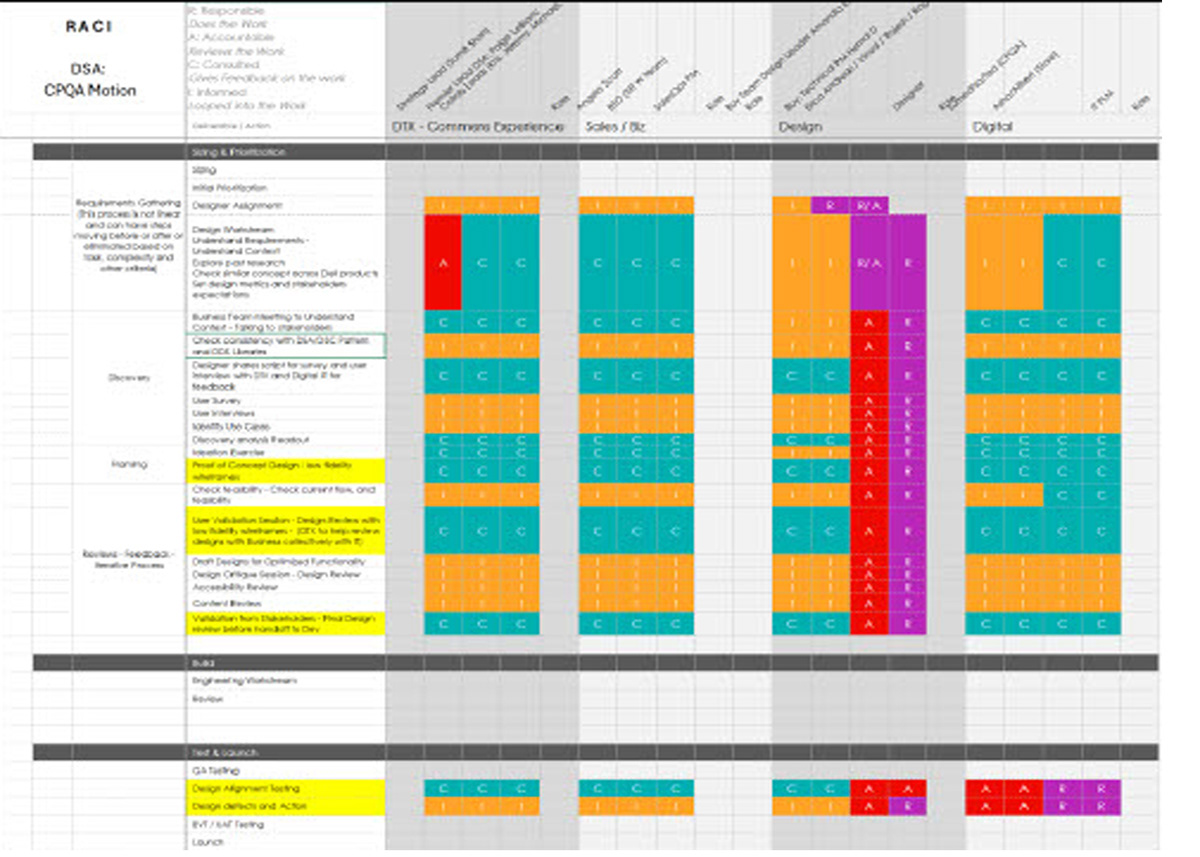
Solution 1: RACI Matrix
A RACI matrix was important because it clearly defines who is doing the work (Responsible), who is making the final decision (Accountable), who provides input (Consulted), and who needs to be updated (Informed). We heard from designers that they were sometimes unclear as who they should be working with and who should be assisting them. Implementing a RACI removed that ambiguity.
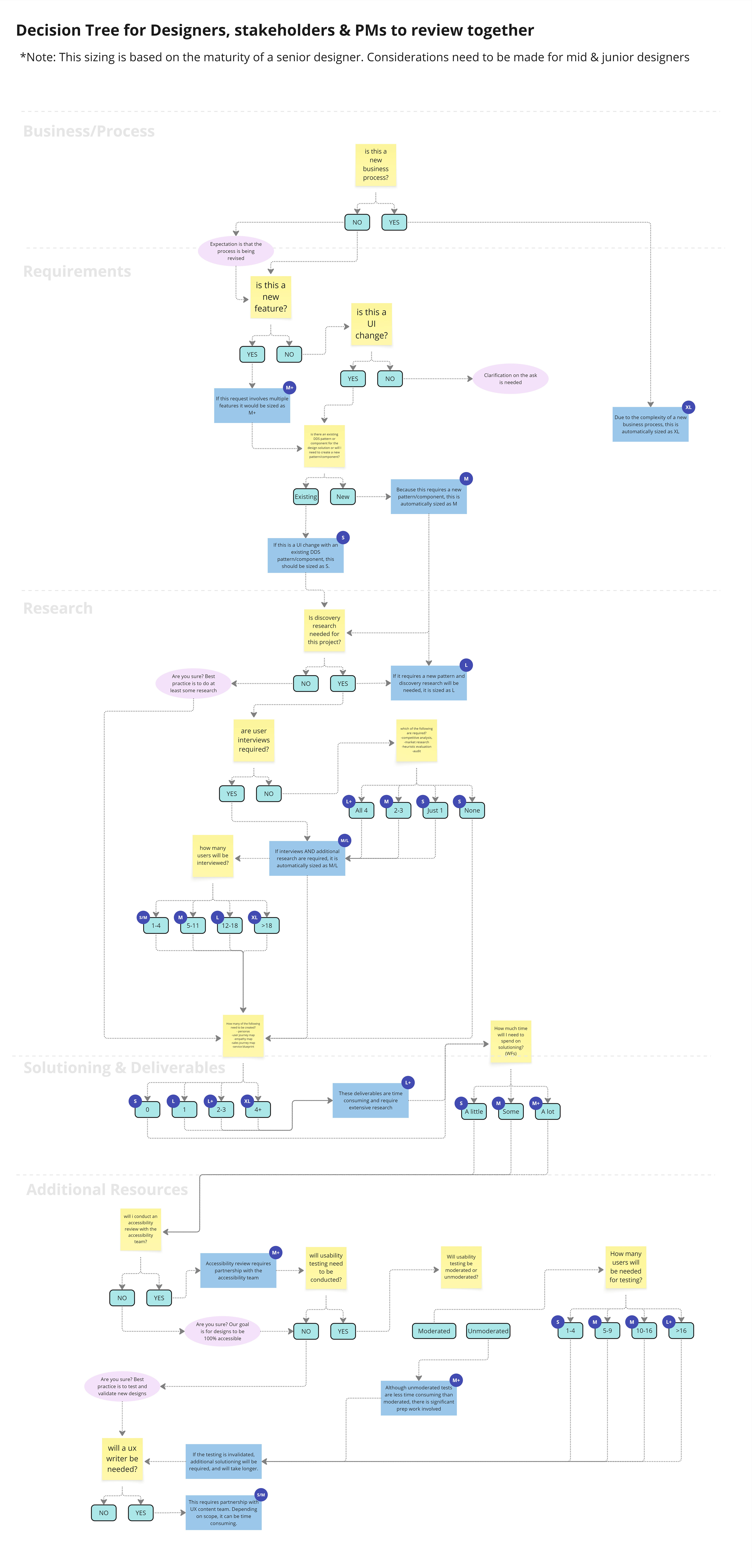
Solution 2: Decision Tree
In our discovery, we learned that some designers don't know where to start when trying to size a project. Creating a decision tree helped them visualize how many factors can contribute to sizing a project, therefore making their estimates more accurate.
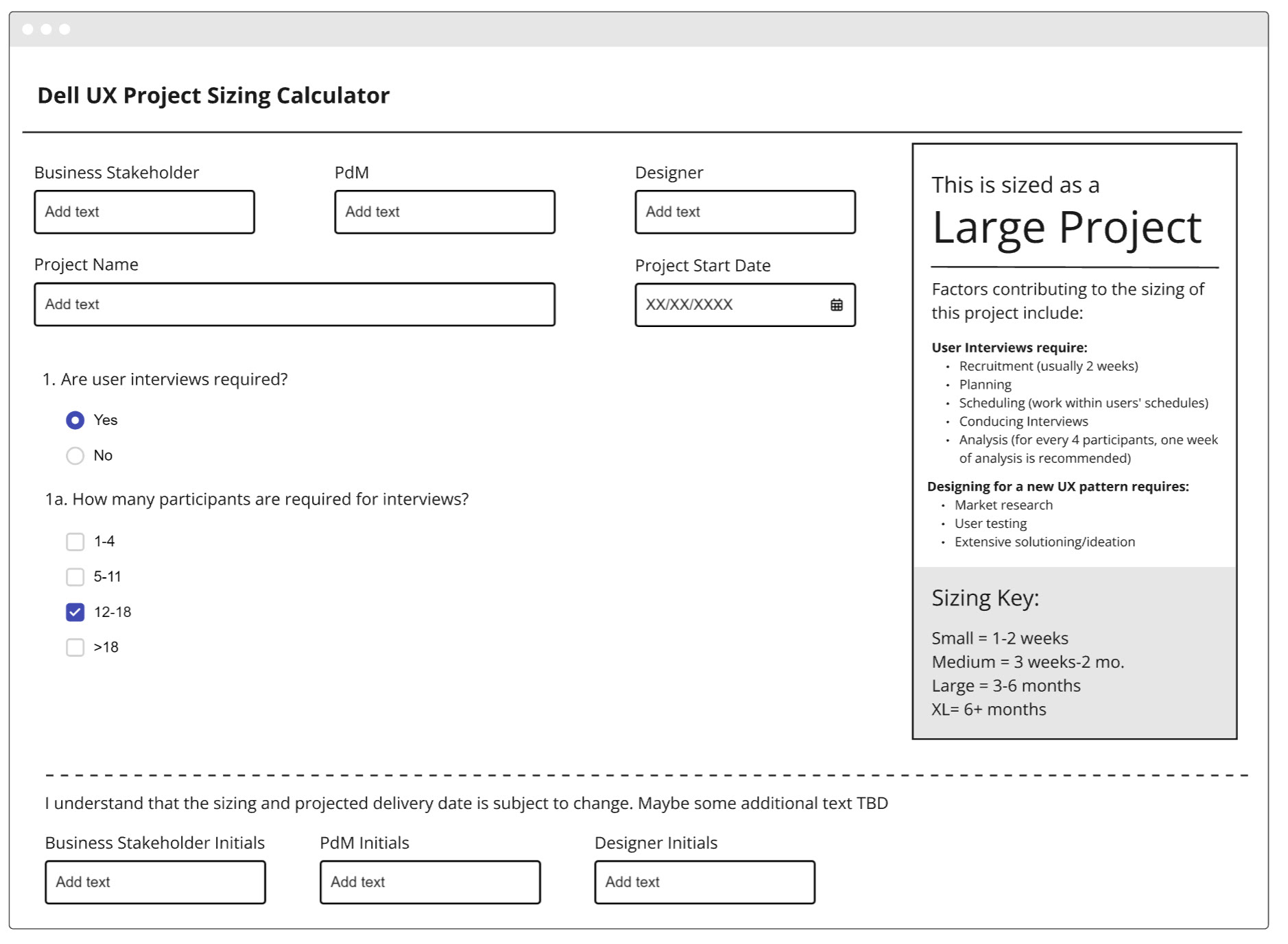
Solution 3: Sizing Calculator
This solution helps stakeholders understand the complexity of UX projects and how many different steps designers take to come to the final design. The calculator acts as a risk-assessment tool. If a high-complexity project is squeezed into a 'Small' timeframe, the tool highlights exactly which UX phases were being sacrificed (like accessibility audits or value stream mapping). This allows designers to have proactive conversations with PMs about potential technical and design debt before the project is even started.
Summary:
Sizing UX projects is more than just an estimation exercise; it is a critical organizational workflow that requires structure, predictability, and transparent communication to succeed. By leading this operational excellence (OpEx) initiative, I transitioned our team away from subjective guesswork and into an objective, data-backed operational framework. Ultimately, this strategic operational shift ensures predictable engineering delivery velocity while fiercely protecting the integrity, health, and standard of the design lifecycle. As designers, we can proactively optimize our internal processes to improve timeline accuracy, but long-term success requires active partnership. True operational efficiency demands a shared understanding from stakeholders, PMs, and business leaders to fully grasp the design process; gaps that our discovery proved are currently lacking across the broader organization.